The 30-Minute Ritual That Separates Great Performers from Blindsided Ones
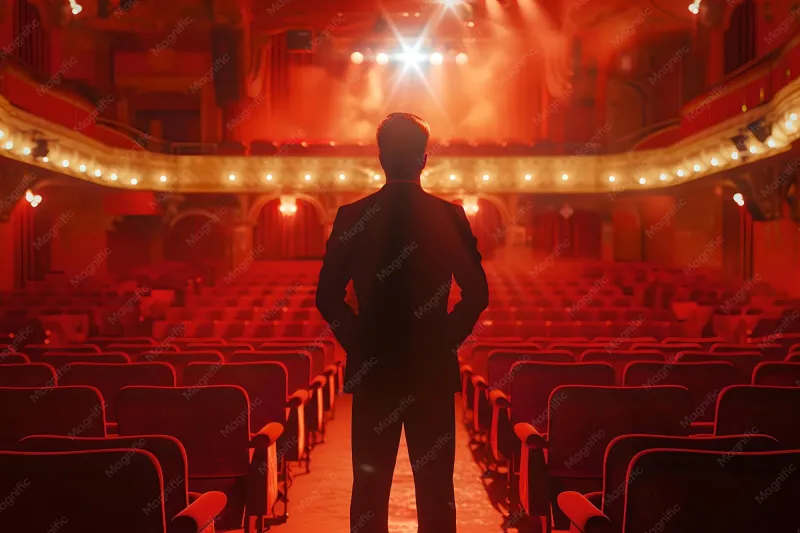
Photo: performer observing empty venue stage preparation before show, via img.freepik.com
The difference between a performer who owns the room and one who spends the whole set playing catch-up rarely comes down to talent. It comes down to what they did in the half hour before the lights went up.
I've talked to enough bookers, venue managers, and fellow performers across the US to know that the most common complaint about live entertainment isn't a lack of skill. It's a lack of awareness. Performers who walk onstage cold — who treat the moment the spotlight hits as the starting gun — are constantly reacting instead of leading. And audiences, even when they can't articulate it, feel that difference.
The fix isn't complicated. But it does require treating those 30 minutes before your set as seriously as the set itself.
Why Pre-Show Intel Is a Professional Skill, Not a Superstition
A lot of performers have rituals before they go on — vocal warmups, breathing exercises, a specific playlist in the green room. Those things matter. But they're inward-facing. What I'm talking about is outward-facing preparation: actively gathering information about the room, the crowd, and the conditions you're about to walk into.
Think of it the way a good sports broadcaster thinks about game day. They don't just show up and improvise commentary. They've done film study, they've checked injury reports, they know which players are having an off week. That context is what makes their commentary feel smart and connected rather than generic.
You're doing the same thing — just for a live performance.
Start With the Room Itself
Get in the venue early. Not performer-early, where you're rolling in 10 minutes before call time. Actually early. Walk the space before there's a crowd in it.
Listen to the acoustics. A high-ceilinged room in a converted warehouse in Brooklyn is going to swallow your voice differently than a low-drop ceiling bar in Nashville. Clap your hands once. Say something out loud. Notice where the sound goes and how fast it comes back. That tells you whether you need to slow down your pacing, punch up your projection, or scale back the layers in your performance.
Walk the sightlines. Where are the dead zones — the spots where someone seated at an angle can barely see the stage? Are there obstructions? Pillars, support beams, a badly placed bar top? Knowing this lets you adjust your physical blocking so you're not performing to a wall.
Check the stage itself. Is there a lip that could catch your foot? Is the floor slick? Is there equipment from the previous act that hasn't been fully cleared? These seem like minor details until you're mid-set and one of them becomes the reason the energy crashes.
Read the Crowd Before They Know You're Watching
This is where it gets interesting. Once people start filtering into the venue, your job is to become a low-key observer. Don't be weird about it — you're not lurking. But you are paying attention in a way most performers never bother to.
Look at the crowd composition. What's the age spread? Is this a group that came together — a company outing, a birthday party, a bachelorette group — or is it a collection of strangers who happened to show up at the same venue? Groups who know each other have an internal social dynamic you can tap into. Strangers need a little more warm-up time before they feel comfortable reacting openly.
Watch how people are carrying themselves. Are they loose and animated, already laughing and talking loudly? Or are they quieter, more reserved, still in that early-evening mode where they haven't fully shifted into entertainment headspace yet? This tells you whether you can open hot or whether you need to earn the energy gradually.
Listen to what they're talking about. You don't need to eavesdrop in a creepy way — just be present near the bar or the entrance for a few minutes. Are people referencing something that happened locally that week? Is there a big game on tonight that half the room would rather be watching? Is there a vibe of celebration or is it more of a 'we needed to get out of the house' crowd? All of that is material.
Talk to the Staff — They Know Everything
This one is criminally underused. The bartenders, the door staff, the venue coordinator — these people have context that you simply cannot get anywhere else.
A quick, genuine conversation with the bartender before the show goes up can tell you: how many drinks deep the crowd already is, whether there was a weird incident earlier in the evening, whether this particular crowd tends to be rowdy or chill, and whether any regulars have strong personalities you might want to be aware of.
I once avoided a genuinely awkward situation at a show in the Midwest because a bartender casually mentioned that the large group in the front row had just come from a funeral reception. That single piece of information completely changed how I opened my set. Instead of coming out with my highest-energy material, I found a warmer, more connective tone. The crowd responded like I'd read their minds.
That's not magic. That's intel.
Check for Unexpected Obstacles
Every venue has something. A microphone that cuts out at certain frequencies. A lighting rig that's going to backlight you in a way that wipes out your facial expressions for the first three rows. A side door that someone keeps opening and closing, letting in street noise at the worst possible moments.
The performers who get blindsided by these things are the ones who didn't ask. Introduce yourself to the sound tech and ask directly: is there anything about this setup I should know about? Most techs will respect the question and give you genuinely useful answers. They've seen every act come through this room and they know where the landmines are.
Synthesize and Adjust Before You Step On
With about five minutes to go, take everything you've gathered and make a decision about your opening. Not your whole set — just the first two or three minutes. How are you entering? What's your first line? What's your first move?
That opening sequence, informed by everything you've just observed, is what determines whether you're leading the room or chasing it. A crowd that feels like you get them from the jump will follow you almost anywhere for the rest of the night.
The 30 minutes before the show isn't downtime. It's the most valuable prep work you'll ever do. Treat it that way, and you'll stop getting blindsided — and start showing up like someone who was born for exactly this room, on exactly this night.