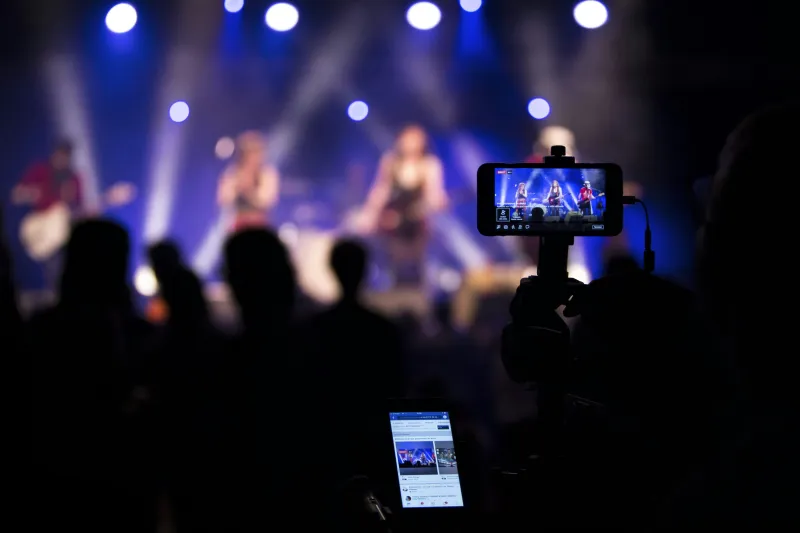
Going Viral Is Not the Same as Getting Booked: The Hidden Cost of Overexposure Online
Let's have an honest conversation that a lot of people in this industry aren't having loudly enough.
You can have a TikTok with 2 million views, a YouTube channel with a loyal subscriber base, and Instagram Reels that consistently hit the Explore page — and still be struggling to land paid bookings. Not because you're not talented. Not because you're doing something wrong, exactly. But because the relationship between online visibility and actual career momentum is a lot more complicated than the "post more content" crowd wants to admit.
This isn't an anti-streaming argument. Platforms like TikTok, YouTube, and Instagram Reels are genuinely powerful tools. But tools can be misused. And right now, a lot of talented performers are accidentally using them in ways that undercut their own leverage in the booking market.
What Bookers Actually See When They Watch Your Feed
Here's something worth understanding about how entertainment industry decision-makers think. When a club owner, event coordinator, or talent buyer is considering booking someone, they're not just evaluating skill. They're evaluating demand. The central question isn't "are they good?" — it's "will people pay to see them?"
And this is where overexposure starts to create a quiet problem.
If your best material is already living permanently on YouTube, a booker has to ask themselves: why would someone buy a ticket to see something they can watch for free right now, from their couch, whenever they feel like it? The perceived scarcity of your live experience drops. And with it, the booker's confidence that your name on a marquee will actually move tickets.
This isn't speculation — it's basic supply and demand applied to entertainment. When something is freely and endlessly available, its perceived value shifts. That's not a moral judgment, it's just how markets work.
The Streaming Funnel vs. The Streaming Dead End
The performers who are navigating this well in 2024 have figured out a crucial distinction: there's a massive difference between using streaming as a funnel and using it as a destination.
A funnel approach means your online content is strategically designed to make people want to experience you live. It teases. It creates context. It builds a relationship with the audience without ever fully satisfying the craving. Think of it like a great movie trailer — it gives you just enough to be genuinely excited without spoiling the experience you're paying for.
A dead-end approach means your best stuff is already online in its complete, polished form. The audience feels satisfied. They liked the video, maybe even shared it. But there's no unresolved tension pulling them toward a live show. The content replaced the desire for the live experience rather than amplifying it.
Ask yourself honestly: is your content creating hunger, or is it feeding people until they're full?
The Scarcity Principle Is Not Dead — It's Just Underused
There's a reason Taylor Swift doesn't put her full concert setlist on YouTube the week before a tour. There's a reason certain comedians don't release their tight five online until after a major run of shows. They understand that mystery and anticipation are still among the most powerful forces in entertainment marketing, even in the age of infinite content.
For independent performers, this doesn't mean going dark online. It means being intentional about what you share and what you protect.
Your signature moment — the thing that makes your live show genuinely different from anything else — should not be living in a public video. That's your live exclusive. Your competitive advantage. The thing that makes someone who's seen your TikToks think, "I need to be in the room when they do that."
Protect it like it matters. Because it does.
What Your Metrics Are Actually Telling the Industry
High view counts with low ticket sales tell a very specific story to industry insiders. It says your content is entertaining as passive consumption but hasn't translated into an audience willing to invest time, money, and effort into a live experience. That gap — between passive viewers and active ticket-buyers — is something savvy bookers notice immediately.
On the flip side, a performer with a smaller but intensely engaged online presence — people who comment, share, show up to every post, talk about them in the replies — signals something much more valuable: a real community. A fanbase that moves.
This is why vanity metrics can actually mislead your own career strategy. A video with 500K views from a broad, random audience might do less for your booking prospects than a video with 20K views from a tight, passionate community that drives four hours to see you perform.
Focus on depth, not just reach.
Rebuilding Your Online Strategy Around Live Growth
So what does a smarter approach actually look like in practice? A few principles that are working for performers right now:
Lead with behind-the-scenes content over performance content. Show the work, the prep, the personality. Make people curious about the full experience without delivering it.
Use live clips strategically and sparingly. A 30-second clip of an audience going absolutely wild is more valuable than a 10-minute full performance video. One shows proof of concept. The other removes the reason to be there.
Make your call-to-action about the live show, always. Every piece of content should have a clear next step that leads toward a ticket, a booking inquiry, or a live event. Treat your feed like a conversation that ends with "come see me in person."
Create content that only makes full sense if you've seen the live show. Inside references, callbacks, reactions from audience members — content that rewards people who've been in the room and makes everyone else feel like they're missing something real.
The Bigger Picture
The performers who are going to build sustainable, growing careers in this landscape aren't the ones who figure out how to go viral. They're the ones who figure out how to make going viral mean something in the real world — how to convert digital attention into genuine demand for a live, irreplaceable experience.
That's the whole game. Online presence is the advertisement. The live show is the product. And you can't let the advertisement become so good that people forget to buy the product.
The goal was never to be the most-watched performer on the internet. The goal is to be the one people can't stop talking about after they leave the venue. Keep that distinction front and center, and your streaming strategy will start to look a whole lot different.