What the Room Is Trying to Tell You (And How to Actually Listen)
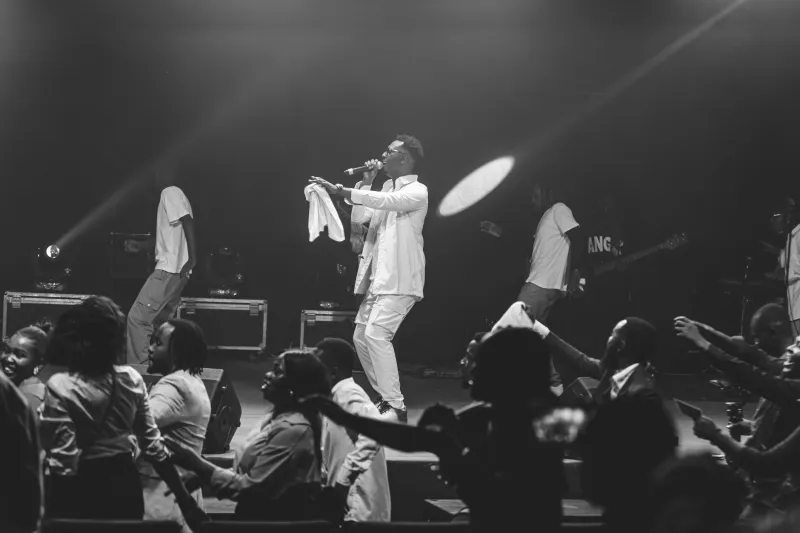
Every room has a language. Not the words the audience shouts back at you, not the applause meter — something subtler than that. A shift in posture. A pocket of silence that lands differently than the one before it. The moment three people in the front row cross their arms at the same time. These are signals, and if you're not trained to read them, you're basically performing blindfolded.
The difference between a performer who survives a tough room and one who owns it almost always comes down to one thing: real-time awareness. Not instinct exactly — more like a developed skill set that looks like instinct once you've put in the reps.
Let's break down what the room is actually telling you and how to translate it into decisions you can act on mid-show.
The Three Modes Every Set Lives In
Before you can read individual signals, it helps to understand that any performance is operating in one of three modes at any given moment: momentum, drift, or resistance.
Momentum is the good stuff — the crowd is leaning in, response times are fast, energy is feeding energy. Your job here is simple: don't overthink it, don't over-explain, and don't slow it down.
Drift is the sneaky one. The crowd hasn't turned on you, but they're not fully with you either. Responses are a beat slow. You're getting polite reactions instead of genuine ones. This is where a lot of performers lose the room without ever realizing it happened.
Resistance is obvious but still tricky to navigate. The crowd is distracted, skeptical, or actively disengaged. This isn't necessarily your fault — it might be the venue, the lineup, the drinks, or the crowd's collective mood walking in the door. But it's still your problem to solve.
Knowing which mode you're in determines everything about what move you make next.
Body Language: The Crowd's Honest Review
Audiences don't lie with their bodies. They might clap politely, but they can't fake what their posture is doing.
Leaning forward is gold. When you see people tilt toward the stage — even slightly — that's genuine engagement. They're anticipating something. Feed it.
Arms crossed or bodies turned sideways is a yellow flag. It doesn't always mean hostility, but it means there's a barrier up. Something isn't connecting. This is your cue to pivot — change your energy level, shift your physical positioning, or drop into something more direct and conversational.
Phone screens lighting up is a red flag that most performers take personally when they shouldn't. People check their phones when they feel like they have a second to spare — meaning you've accidentally given them a gap. Tighten the pacing, raise the stakes, or hit them with something unexpected.
The front row is your early warning system. Watch them closest. They set the tone for the rest of the room more than most performers realize.
The Silence Diagnostic
Not all silence is the same, and learning to tell the difference is one of the most underrated skills in performance.
Anticipatory silence is a gift. The crowd is holding their breath because they're waiting for what comes next. This is the best kind of quiet — lean into it, let it stretch a beat longer than feels comfortable, then deliver.
Confused silence has a texture to it. You can almost feel the audience trying to figure out what just happened. This usually means a setup wasn't clear, a reference didn't land, or the transition between ideas was too abrupt. Don't panic — but don't ignore it either. Acknowledge it lightly and move on with more clarity.
Disconnected silence is the dangerous one. It's flat. There's no anticipation, no confusion — just absence. This is drift territory. When you feel this, it's time to change something. Volume, pace, physical movement, direct audience engagement — anything that resets the dynamic.
Laughter Timing as a Diagnostic Tool
If you're doing comedy, stand-up, or any kind of performance with humor woven in, pay attention to when the laugh arrives, not just whether it does.
A laugh that comes right on cue means the crowd is locked in and tracking with you. A laugh that comes a half-beat late means they got there, but they had to work for it — your setup might need tightening. A laugh that comes early means you've got a room that's ahead of you, which is actually a great problem to have. Speed up. Trust them.
No laugh when you expected one isn't always a failure. Sometimes it means the room is more invested than you thought and they're waiting to see where you go. Read the silence after the beat — if it's leaning forward, you're fine.
A Quick Framework for Real-Time Decisions
When you're mid-show and trying to process all of this in real time, you need a simple decision tree, not a philosophy lecture. Here's the one that works for me:
- What mode is the room in right now? Momentum, drift, or resistance.
- What's the primary signal I'm seeing? Body language, silence type, response timing.
- What's the smallest change I can make that addresses this signal? Don't blow up the whole set — make a surgical adjustment.
Pivot when the signal is consistent across multiple parts of the room. One person crossing their arms is just one person. Ten people doing it at the same time is data.
Pause when the energy is ahead of you and you need a beat to let something land.
Pedal to the metal when momentum is real and the room is yours — this is not the time for a slow-burn detour.
The Skill You Can't Fake
Reading a room in real time is not something you can shortcut. It comes from reps — from performing in enough different venues, in front of enough different crowds, that you start to recognize the patterns. But you can accelerate the process by actively watching for these signals instead of just hoping the show goes well.
The performers who consistently steal shows aren't just talented. They're paying attention in a way that most people aren't. And in a room full of performers hoping the crowd shows up, being the one who actually sees the crowd is the most powerful advantage you can have.