Put the Phone Down: The Pre-Show Digital Detox That Gives You an Unfair Edge
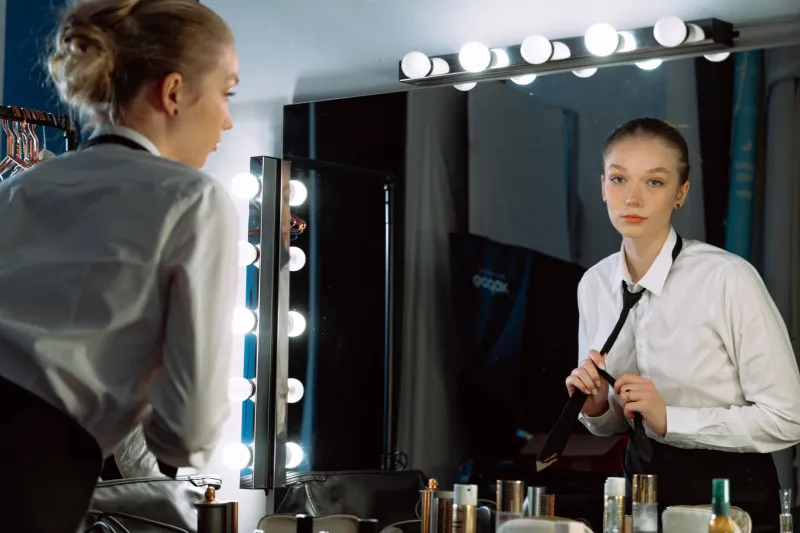
Picture this. You've got forty-five minutes until you walk out. The backstage area is buzzing, someone's running sound check in the next room, and you're hunched over your phone reading a reply to a comment that has absolutely nothing to do with tonight's show.
That's not just a bad habit. That's a performance tax you're paying before you even hit the stage.
The gap between an average set and a great one isn't always about talent. Sometimes it's about where your head is when you step into the light. And in 2024, with a supercomputer full of distractions living in your pocket, managing your mental state before a performance has become one of the most underrated skills a performer can develop.
What's Actually Happening to Your Brain
Here's the part nobody tells you in any performance workshop: your brain doesn't switch gears instantly. When you're scrolling social media, reading emails, or getting pulled into a group chat, your nervous system is in reactive mode. You're responding to external stimuli, processing micro-stressors, and burning cognitive bandwidth on things that have zero payoff for what's about to happen onstage.
When you finally step in front of an audience in that state, your brain is still partially back in your phone. You're not fully present. You might not even notice it—but the audience does. There's a flatness, a slight disconnect, a sense that the performer is technically there but not quite there.
Contrast that with a performer who's been in a low-stimulation state for the past hour. Their nervous system is calm. Their focus is internal. When they walk out, they arrive fully—and that arrival is something audiences feel in their chests before a single word is spoken.
The Specific Ways Phones Wreck Your Prep
Memory recall takes the hit first. If your performance involves any memorized material—scripts, set lists, choreography, lyrics—distraction in the pre-show window is actively working against your recall. Memory consolidation and retrieval both suffer when your attention is fragmented. That moment where you blank mid-set? Sometimes it's nerves. But a lot of the time it's because you never gave your brain the quiet it needed to lock things in.
Emotional regulation gets compromised. One bad text. One comment that got under your skin. One piece of news you didn't need to read right now. Any of these can create an emotional undercurrent that bleeds into your performance in ways you can't fully control. You'll be technically performing while emotionally processing something that happened on your screen twenty minutes ago.
Stage presence suffers. This one's harder to quantify but easier to feel. Real stage presence comes from being genuinely in the moment—aware of the room, connected to the energy, responding to what's actually happening rather than what's happening in your head. A phone-heavy pre-show routine keeps you locked in your own mental feed. That's the opposite of presence.
The Protocol That Actually Works
This isn't about being anti-technology or doing some elaborate ritual. It's about drawing a clear line and protecting the window before a performance the way a pro athlete protects their warmup.
Set a hard cutoff. Sixty minutes before showtime, the phone goes into airplane mode or gets handed to someone you trust. Not silent. Not face-down. Off or genuinely inaccessible. This removes the temptation entirely and signals to your brain that the pre-show window has started.
Fill the silence intentionally. The goal isn't just to remove the phone—it's to replace it with something that actually serves your performance. Light movement. Deep breathing. Running through your material mentally. Listening to music that matches the energy you want to bring to the stage. Some performers journal. Some just sit quietly. The specific activity matters less than the intention behind it.
Handle logistics before the cutoff. Promoter questions, parking issues, merch setup—deal with all of that before your sixty-minute window starts. The reason most performers can't put their phone down is because they haven't drawn the line between business mode and performance mode. Build a pre-show checklist that gets all the practical stuff handled early, so the phone actually becomes unnecessary once the countdown begins.
Create a physical anchor. Some performers use a specific ritual to mark the transition—a certain song they always listen to last, a specific warmup routine, even something as simple as changing into their performance clothes at a set time. The ritual itself trains your nervous system to recognize: this is when we shift gears. Over time, the anchor becomes automatic.
What Changes When You Do This Consistently
The first few times you try this, it'll feel uncomfortable. That discomfort is information. It tells you how dependent you've become on the stimulation loop and how much mental space you've been surrendering without realizing it.
After a few weeks of consistent practice, something shifts. The opening of your sets starts feeling sharper. Your recall gets more reliable. You stop needing the first few minutes to warm up to the room—you arrive warm. Audiences notice it even if they can't name it. Bookers notice it too.
The performers who consistently show up with that kind of locked-in presence aren't necessarily more talented than everyone else in the lineup. They're just more intentional about protecting the mental real estate that makes great performance possible.
Putting the phone down an hour before showtime is one of the lowest-cost, highest-return adjustments you can make to your performance routine. The competitive edge is sitting right there in your pocket.
Leave it there.