Your B-Game Might Actually Be Your Secret Weapon
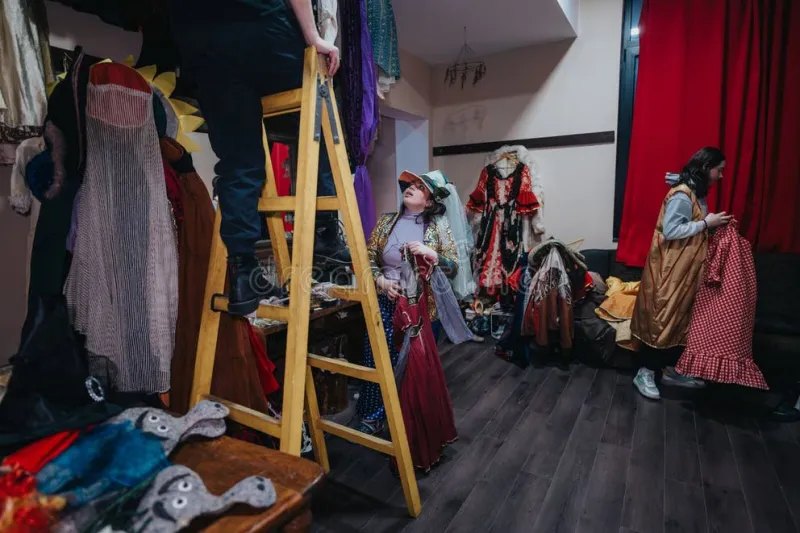
Photo: performer backstage preparing multiple costume options entertainment, via thumbs.dreamstime.com
Most performers treat their backup material like a spare tire — something you only reach for when things go wrong. But the entertainers who stay consistently booked know something the rest of the industry hasn't figured out yet: your alternate routines might be doing more heavy lifting than your headliner set ever could.
There's a concept I've started calling the Understudy Effect, and once you see it, you can't unsee it.
What the Understudy Effect Actually Means
In theater, the understudy exists in the background — prepared, polished, and waiting. But here's what most people overlook: understudies often outperform the lead because they've had to be more prepared. They don't have the luxury of coasting on reputation or muscle memory. Every rehearsal matters because they might only get one shot.
The same dynamic plays out in live entertainment. The performer who has three or four fully developed versions of their show — tailored for different room sizes, crowd demographics, and energy levels — isn't just more versatile. They're more confident. And confidence is something audiences feel before you even open your mouth.
When I started building out what I call my alternate sets, something unexpected happened. Booking inquiries started coming in from venues and event types I'd never targeted before. A corporate holiday party here, a late-night bar show there, a daytime family event on a Saturday afternoon. The common thread? Each of those clients felt like I was made specifically for them — because in a real sense, I was.
Why Versatility Is the Real Currency in Entertainment
The entertainment booking world in the US is brutally competitive, and most performers are fighting over the same narrow slice of the market. They've built one incredible show and they're pitching it everywhere, hoping it fits. Sometimes it does. A lot of times it doesn't.
Bookers — whether they're event planners in Chicago, venue managers in Nashville, or corporate HR coordinators in Dallas — are looking for something specific. They want a performer who gets their audience without having to be told twice. When you walk into a pitch or submit a booking package and you can say, 'Here's what I do for a late-night crowd, here's my version for a seated dinner event, and here's what I bring to a festival stage' — that's not just impressive. That's a problem solved.
Versatility signals professionalism. It tells a booker that you've done this enough times to know that one size never fits all.
Building Material That Actually Works in Multiple Contexts
Here's where a lot of performers get tripped up. They think developing alternate material means watering down their main act or compromising their artistic identity. That's not it at all.
Think of it less like creating different characters and more like adjusting the dial on who you already are. Your core energy, your signature moments, your authentic performance voice — those don't change. What changes is the framing, the pacing, the content choices, and the way you open and close.
For me, it looked like this: I took the elements of my show that consistently landed across all audience types and built those into a kind of universal foundation. Then I developed specific modules — bits, transitions, crowd interaction techniques — that I could layer on top depending on the room. A rowdy Friday night crowd in a comedy club gets a different version of the same performer than a Wednesday afternoon corporate audience in a hotel ballroom. Both are authentically me. Both feel custom-made to the people sitting in front of me.
The trick is doing the work before showtime, not improvising on the fly out of desperation.
The Psychology Behind Multiple Performance Personas
There's real psychological science backing this up. Research on mental flexibility — the ability to shift between cognitive frameworks without losing your footing — consistently shows that people who practice this kind of switching perform better under pressure. For performers, having multiple show versions isn't just a booking strategy. It's a mental resilience tool.
When you know you have options, you stop white-knuckling every performance. You stop clinging to a script that isn't working because you're afraid there's nothing else in the tank. That desperation? Crowds smell it immediately. It's the fastest way to lose a room.
Conversely, when you know you can pivot — when you've rehearsed your B-material until it's just as sharp as your A-material — you perform with a looseness and ease that audiences find magnetic. You look like someone who's completely in control, even when the night is throwing curveballs.
How to Start Developing Your Alternate Sets
If you've been operating with a single show for a while, the idea of building multiple versions can feel overwhelming. Start smaller than you think you need to.
Pick one upcoming booking that's slightly outside your comfort zone — a different venue type, a different audience demographic, a different time slot than you're used to. Instead of forcing your standard set into that context, ask yourself: what would this crowd actually respond to? What do they need from a performance tonight?
Then build toward that. Borrow from your existing material where it fits, and identify the gaps. Those gaps are where your new, more versatile performance identity starts to take shape.
Document everything. What landed, what didn't, what surprised you. Over time, you'll accumulate a library of material and approaches that gives you genuine range.
The Performers Who Stay Booked Know This Already
Look at the entertainers in any genre who maintain long, consistent careers — the ones who are working every weekend, who have a waitlist of clients, who seem to thrive in any room. Almost without exception, they're not riding a single brilliant act. They're deploying a toolkit.
Your main act is your marquee. It's the thing that gets people excited, that earns the headline. But your backup material, your alternate routines, your B-game? That's what keeps you working. That's what turns a one-time booking into a repeat client. That's what gets you recommended to the next venue before you've even left the parking lot.
Don't just build a great show. Build a great range. That's where the real career lives.