Your Opener Isn't Your Warmup Act — They're Your Strongest Booking Argument
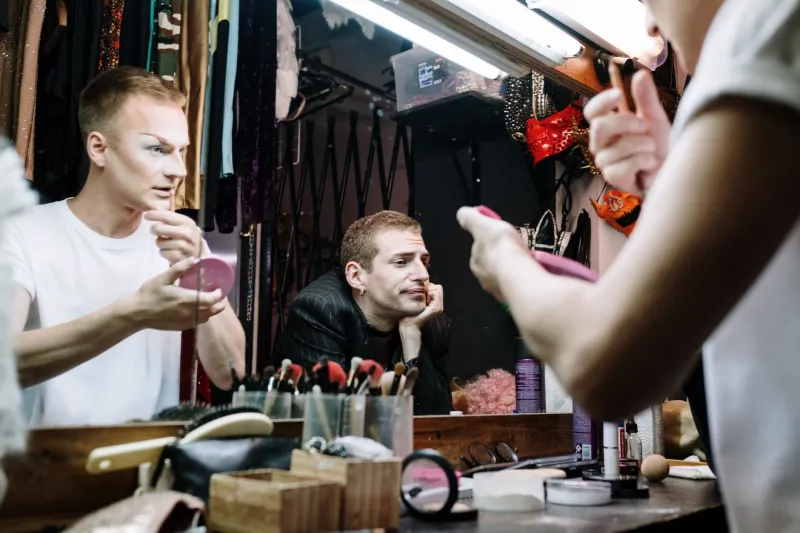
Let's get honest about something most performers never say out loud: the way you treat your opening act says more about your professionalism than almost anything else you do that night.
Bookers notice. Venue managers notice. Other performers on the circuit absolutely notice. And yet the default behavior in most performance spaces is for the headliner to treat the opener like a pre-game show — politely tolerated, minimally acknowledged, and quickly forgotten once the real business starts.
That approach is leaving bookings on the table. Here's why — and what to do instead.
The Unspoken Contract Nobody Explains
When two performers share a bill, there's an implicit agreement that most people only understand in one direction: the opener builds energy for the headliner. That's the conventional wisdom, and it's not wrong.
But the contract goes both ways.
The headliner has a responsibility to the opener too — not just as a courtesy, but as a strategic investment. When you actively support the performer who's warming up your crowd, you're not being generous. You're being smart. A well-supported opener does a better job. A better job means a hotter room when you take the stage. A hotter room means a better show. A better show means a stronger callback.
It's not complicated. But it requires treating the opener as a collaborator rather than a placeholder.
What Collaboration Actually Looks Like
This doesn't have to be complicated or time-consuming. The shifts that matter are mostly attitudinal, with a few practical moves that make a real difference.
Talk to them before the show. Not a quick nod in the green room — an actual conversation. Find out what they're planning to open with, what kind of energy they're trying to set, whether there's anything in their set that might create a natural transition into yours. You don't have to choreograph the whole night, but showing up informed makes both of you better.
Watch their set, or at least part of it. This one costs you almost nothing and signals everything. When the opener sees you paying attention from the back of the room, they perform differently — with more confidence, more commitment. And you get live intelligence about the crowd's current temperature before you walk out.
Give them a genuine intro. If you're in a position to introduce the opener or acknowledge them afterward, do it with specificity. Not "give it up for so-and-so" — but something real. Something that tells the audience this person was worth their attention. That costs you thirty seconds and earns you genuine loyalty.
Share the credit publicly. After a strong shared bill, talk about it. On social, in conversations with bookers, when you're pitching future shows. "We put together a really strong lineup" is a more powerful sentence than "I had a great night" — and it positions you as someone who understands how shows actually work.
Why Bookers Care About This More Than You Think
Here's the part that might surprise you. Bookers aren't just evaluating individual performers anymore — especially not in mid-size markets where the same venues book the same rotating pool of talent. They're evaluating reliability, professionalism, and increasingly, chemistry.
A performer who can be pitched as part of a proven combination is dramatically easier to book than a solo act that requires the venue to build a lineup from scratch. Think about it from the booker's perspective: if they know that putting you and a specific opener together produces a predictable, high-energy show with good crowd flow, you've just solved a logistical problem for them. That's valuable. That gets you called first.
The performers who understand this start to position themselves differently. Instead of pitching themselves, they pitch packages. "I've done three shows with [name] and the dynamic works — crowds stay longer, energy stays high, and the feedback has been strong both ways." That's a sentence that closes bookings.
Building the Alliance Intentionally
This doesn't happen by accident. You have to be deliberate about identifying performers whose work complements yours without competing with it. The best pairings share a general audience but bring different enough energy that the contrast feels intentional rather than redundant.
Once you find those people, invest in the relationship beyond the gig. Go see their solo shows. Recommend them when someone asks you for a referral. Tag them when you're talking about a shared bill. These are small things, but they build the kind of professional trust that turns a one-time pairing into a recurring package — and a recurring package into a reliable income stream.
The Bigger Picture
The entertainment industry runs on relationships. Everyone knows that. But most performers interpret that to mean relationships with bookers, managers, and industry gatekeepers. The relationship with the performer standing next to you on the bill is just as important — sometimes more so.
Your opener isn't your warmup act. They're your collaborator, your advocate, and potentially your strongest argument for why a venue should book you again. Treat them accordingly.
Because here's the truth: a showstopper doesn't just stop the show for themselves. They make the whole night worth remembering — and they know exactly who helped them do it.